
Learning Nuggets
What research says about learning and AI. Short, with sources.
I am Rico Eberle. In short videos and articles I explain what we know about learning and AI, for teachers, trainers and everyone in continuing education. I do this on my own, alongside my job, teaching and local politics.
No posts found. Try a different term.
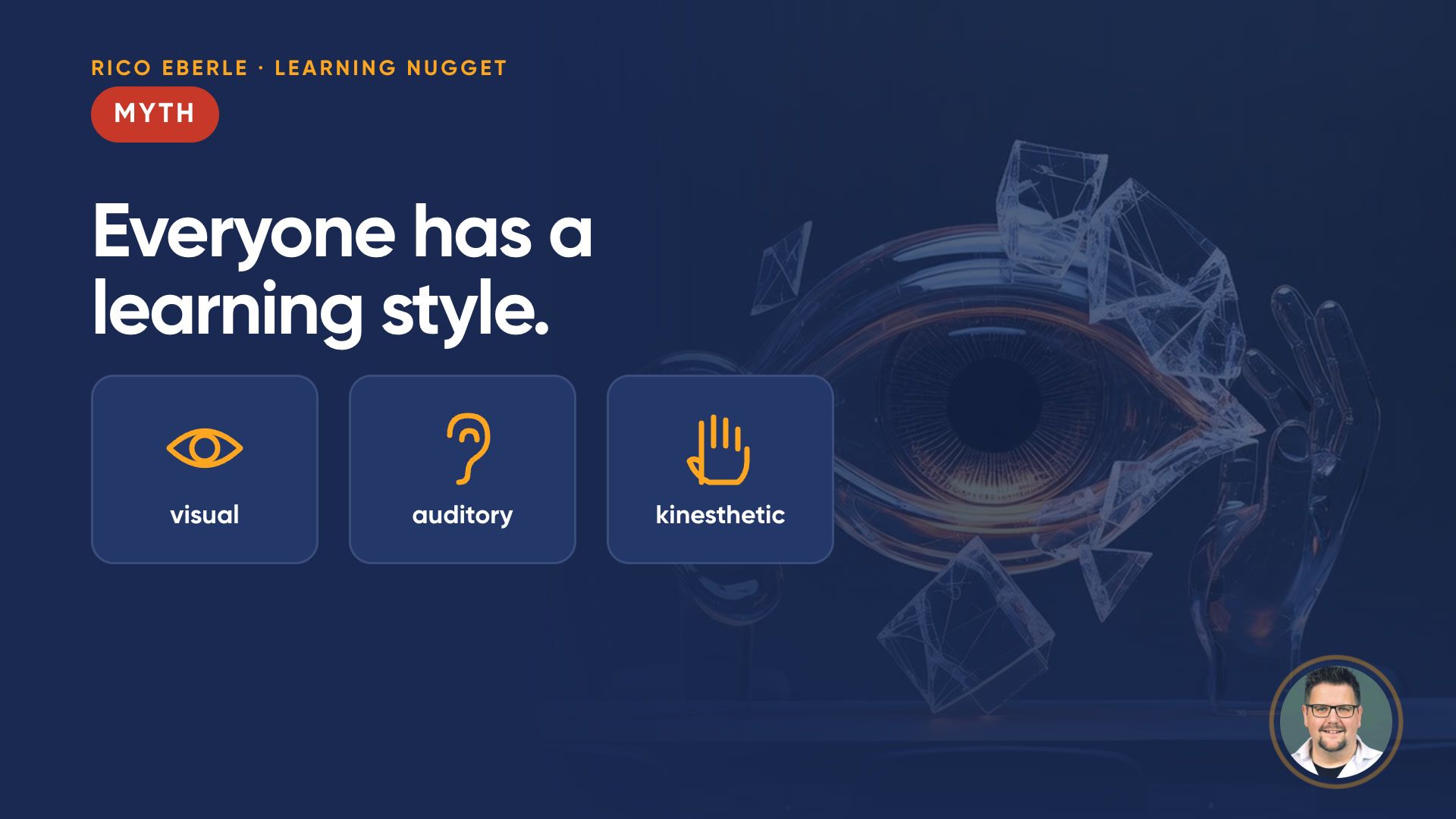
Learning styles are a myth. Here's what works.
There is no evidence for learning styles, yet nine in ten educators believe in them; matching the format to the content works better.
Mix, don't block: three times better on the test
Mixed practice feels harder than practising in blocks but lasts longer: a week later, the mixed group scored 63 rather than 20 percent.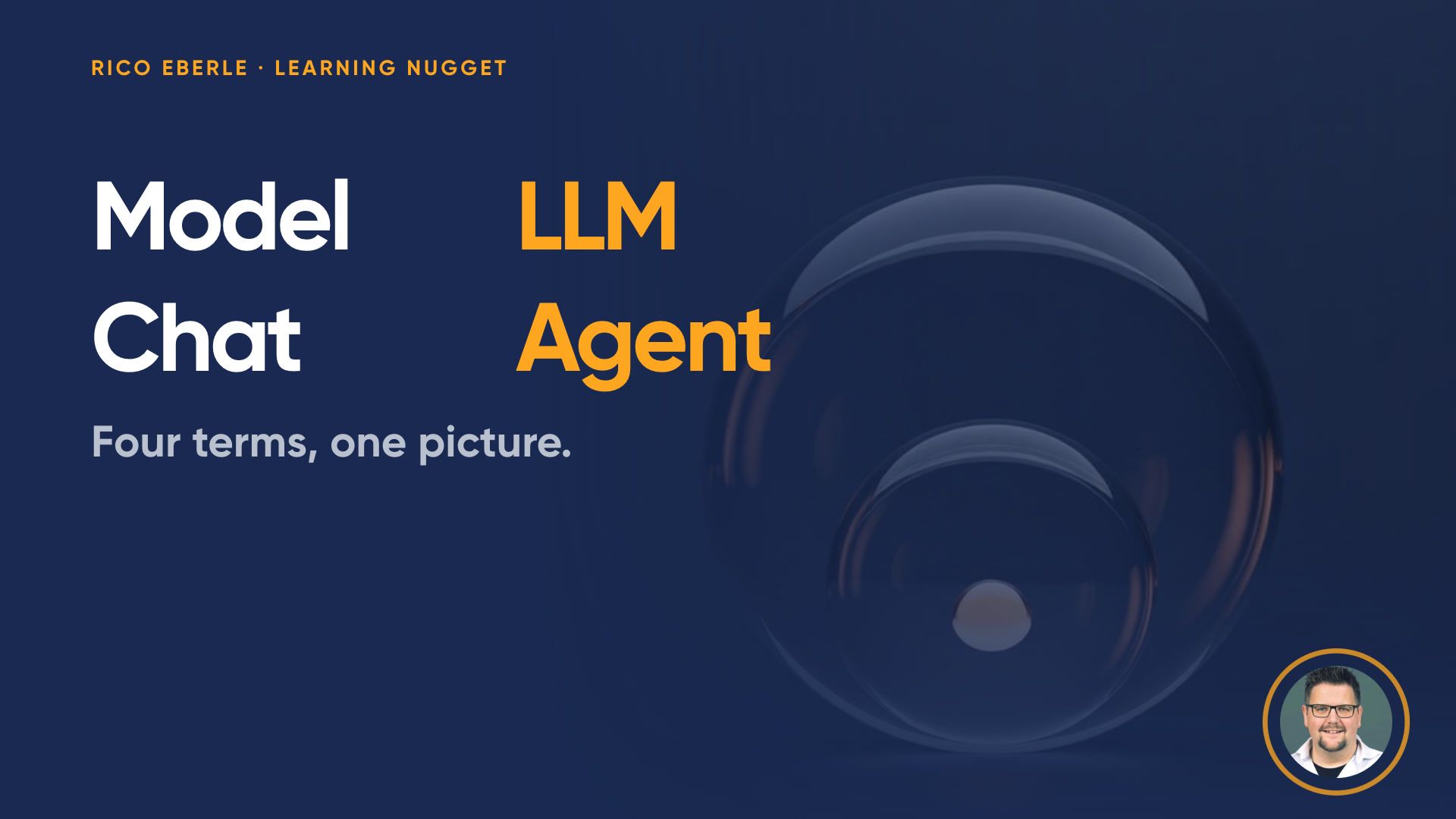
Model, LLM, chat, agent: four terms, one picture
Model, LLM, chat and agent sit inside each other like layers: the model computes, the chat answers, the agent acts.
RAG explained: your AI never read the handbook
An AI assistant with RAG only sees a few snippets of your documents; if the material fits in the context window, it is often better to put it all in.
Three time sinks you can hand over to AI
In a trial in England, teachers using ChatGPT spent 31 percent less time on lesson preparation; three tasks can be handed over as drafts.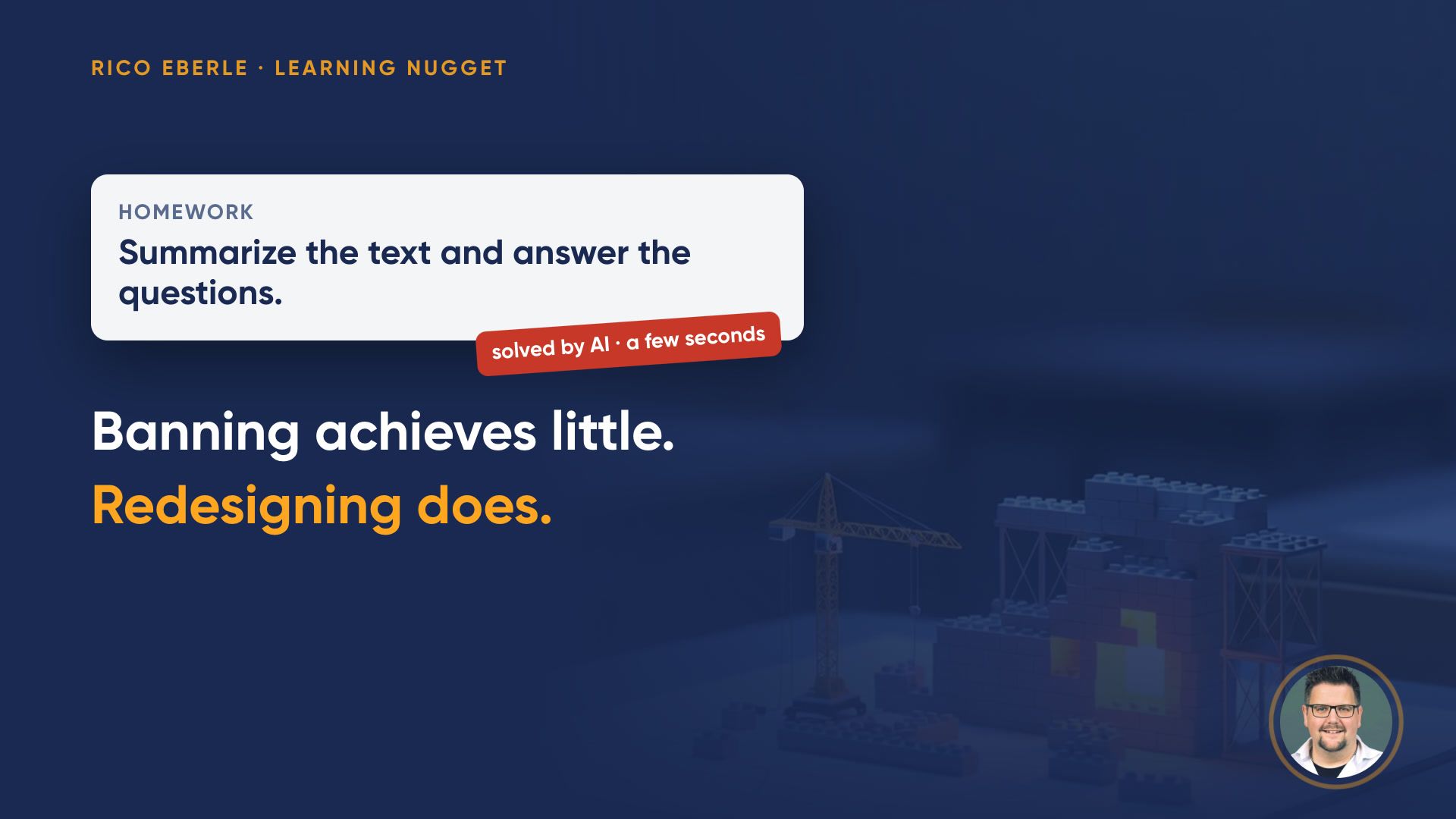
Making assignments AI-robust
Banning AI for homework achieves little. Redesigning the assignment keeps the thinking with the learners.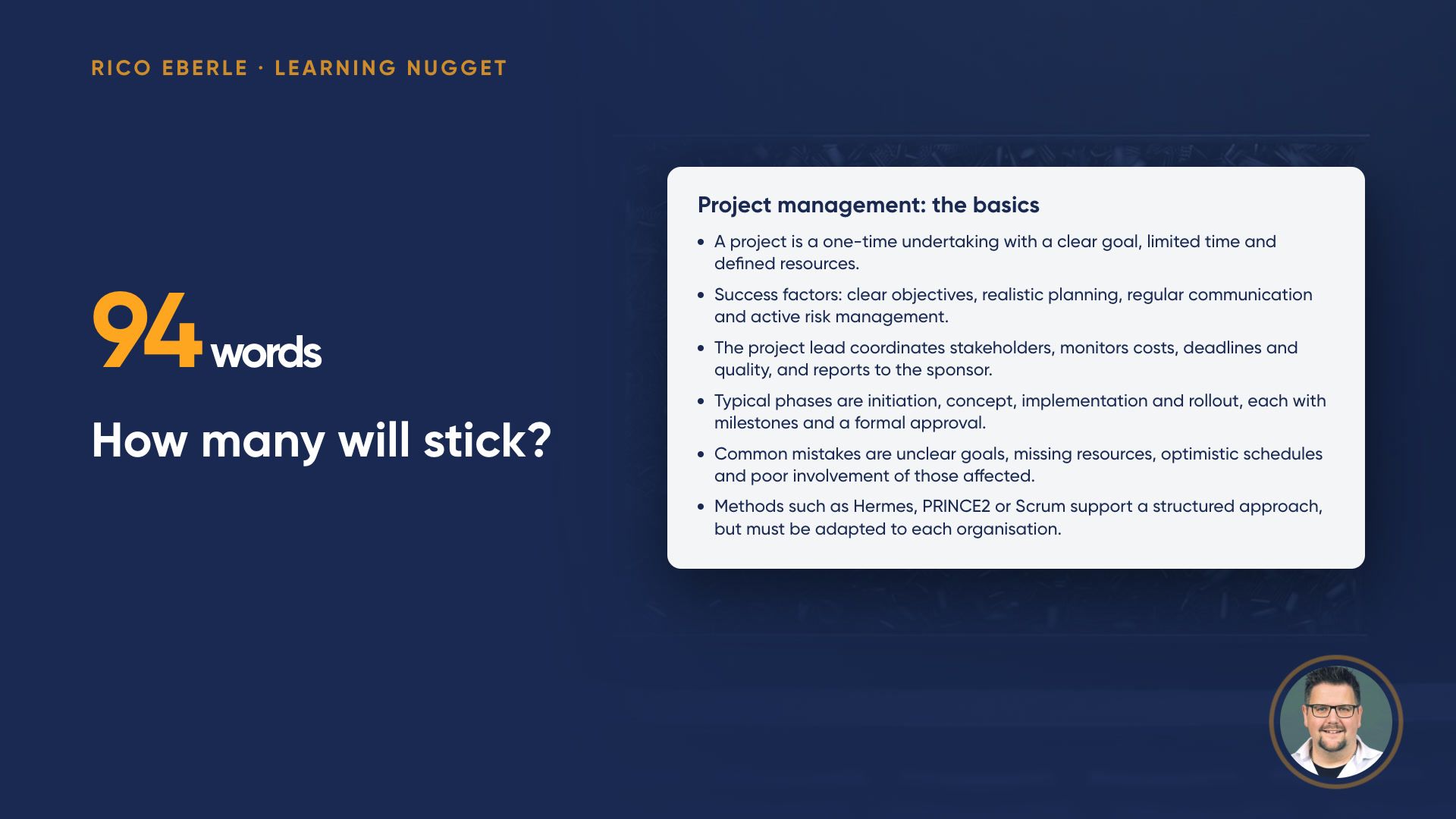
Less on the slide, more room to think
Listening while reading a full slide means two streams of language at once, and that attention is then missing for understanding.
The data traffic light: what can go into AI?
Learners' personal data does not belong in AI tools; a simple traffic light helps you decide quickly what can go in.
Online is not the same as online
"Online" says little about a course. Three dimensions show which balance of flexibility, guidance and self-regulation fits whom.
Learning isn't an event. It's a rhythm.
Without repetition, what we learn is soon gone, as Ebbinghaus showed in 1885; planning moments of recall turns learning into a rhythm.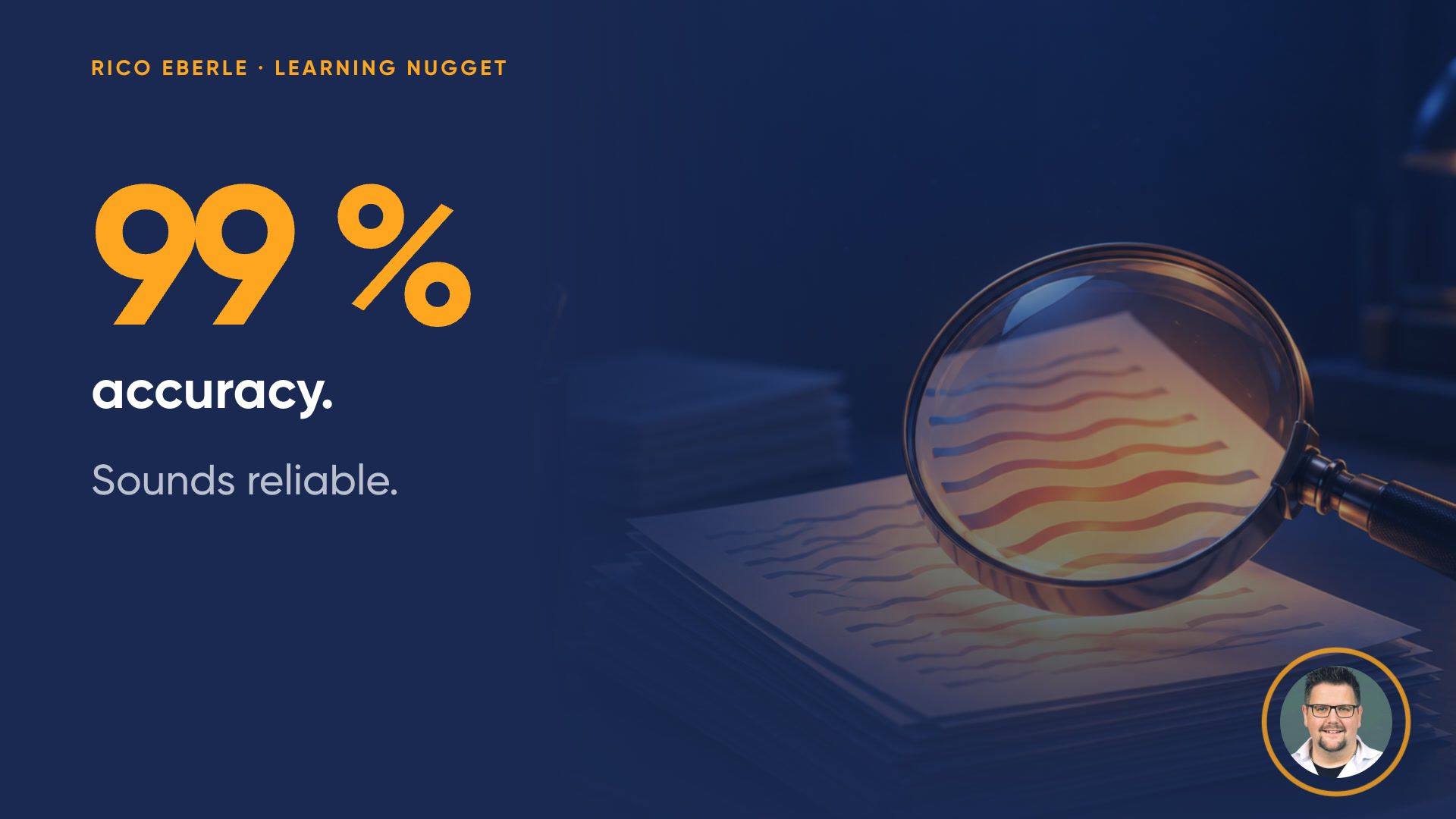
AI detectors are not proof
Even one percent false alarms means ten honest students suspected per 1000 essays, and in practice AI detectors are far less accurate.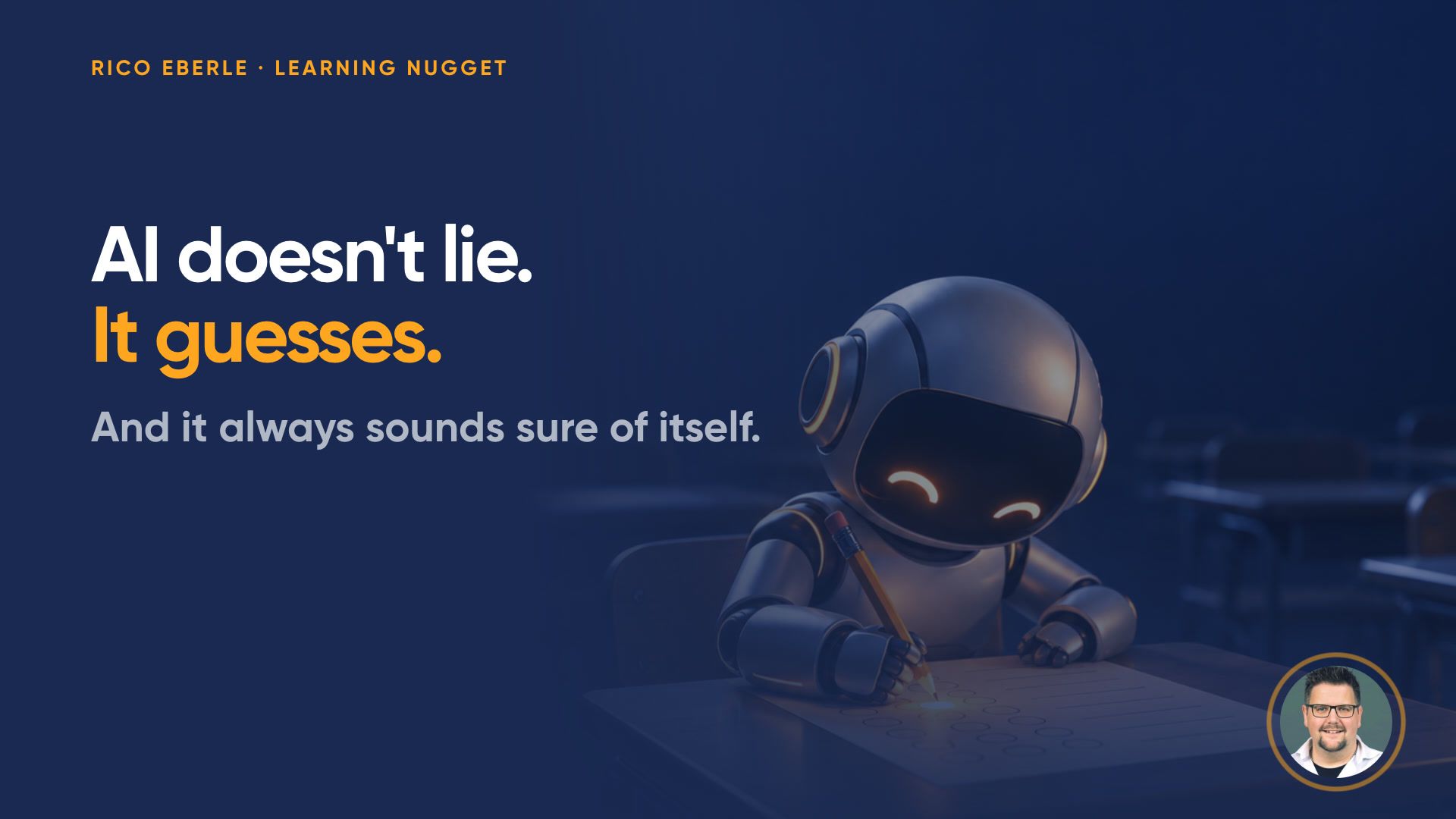
AI doesn't lie. It guesses.
Language models don't make things up on purpose: they pick the most likely next word and are rewarded for guessing.