63 versus 20 percent. That was the gap between two groups one week after practice. Both had practised for the same amount of time, with the same problems. Only the order was different.
The experiment
In 2007, Doug Rohrer and Kelli Taylor had university students learn how to calculate the volume of different solids. Everyone got the same problems and the same amount of time. Only the order differed:
- Blocked: first all problems for the first solid, then all for the second, and so on.
- Mixed: the same problems, but shuffled.
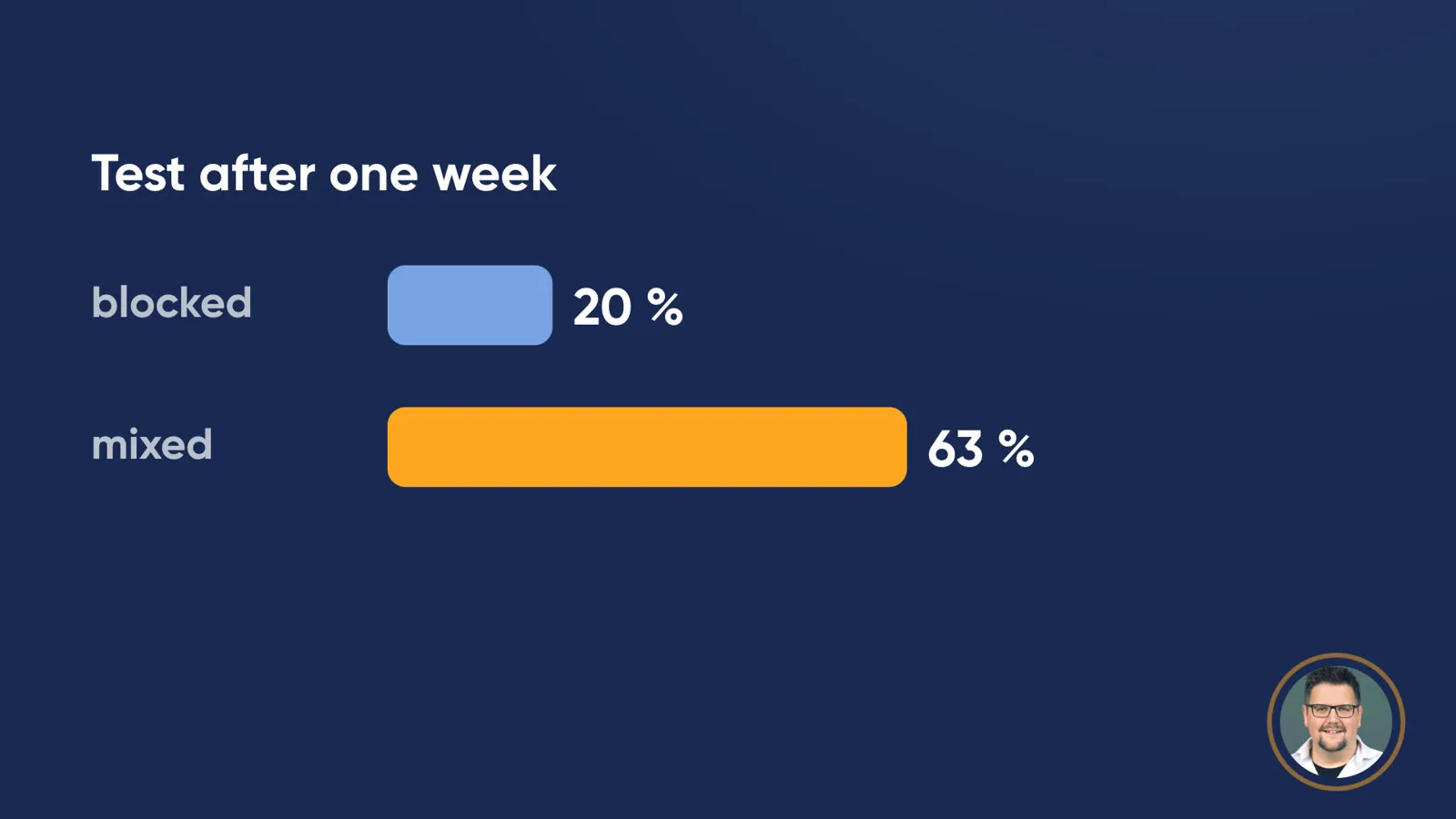
A week later, students in the mixed group solved 63 percent of the test problems correctly, students in the blocked group only 20 percent. That is a little over three times as many.
During practice it was the other way round
During practice, the blocked group was clearly ahead, with 89 percent correct compared with 60 percent in the mixed group. That’s the twist.
When you practise in blocks, you apply the same procedure over and over and quickly feel confident. When you practise mixed, you first have to work out which procedure fits each problem. That takes more effort. And telling the problems apart is what the test requires later.
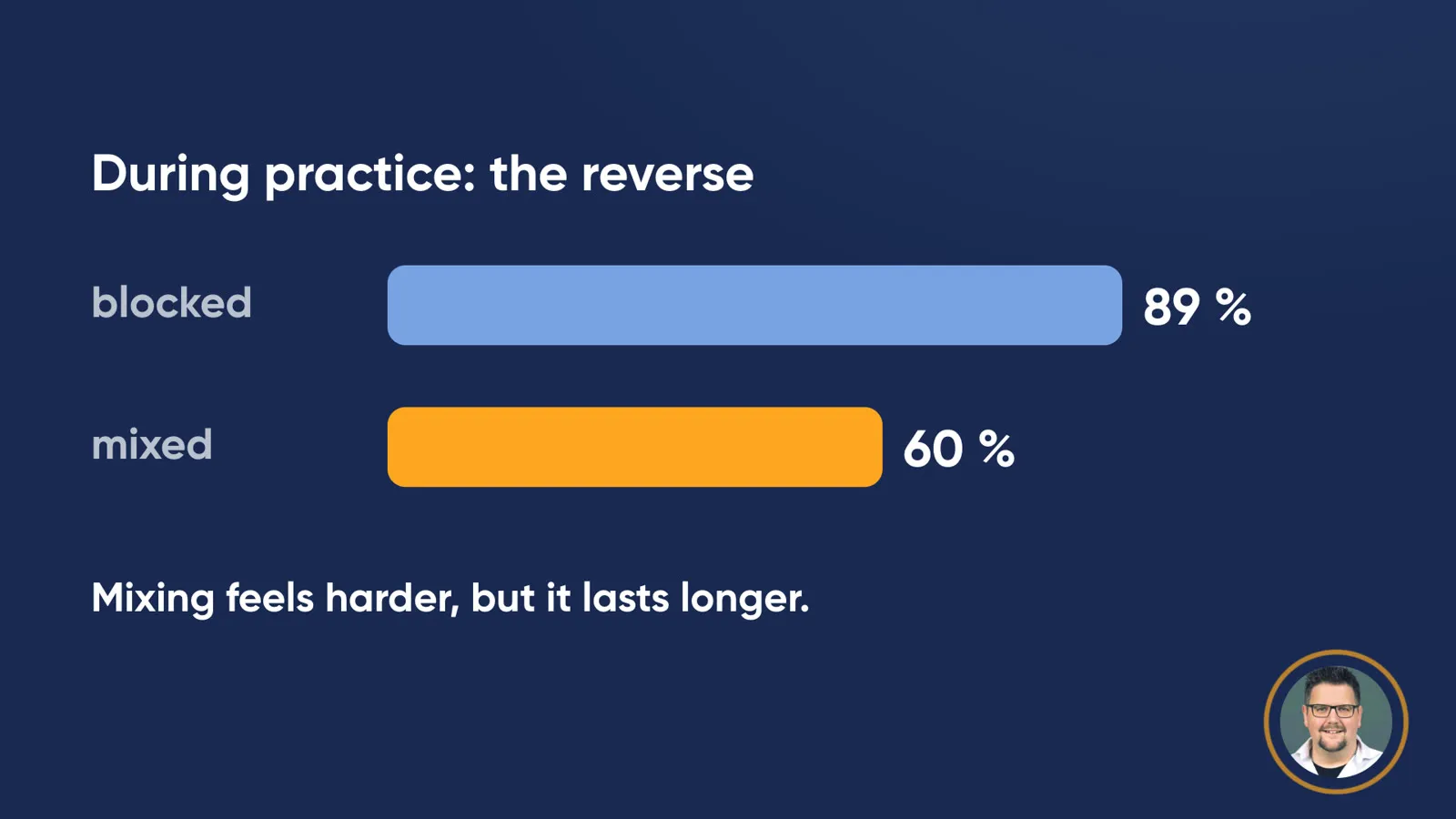
Mixing feels harder, but it lasts longer.
The feeling misleads adults too
In 2008, Nate Kornell and Robert Bjork had adults learn the painting styles of different artists, once blocked and once mixed. Most learned more from the mixed version. Even so, 78 percent rated blocking as equally good or better, a little over three quarters. How practice feels is a poor guide to what sticks.
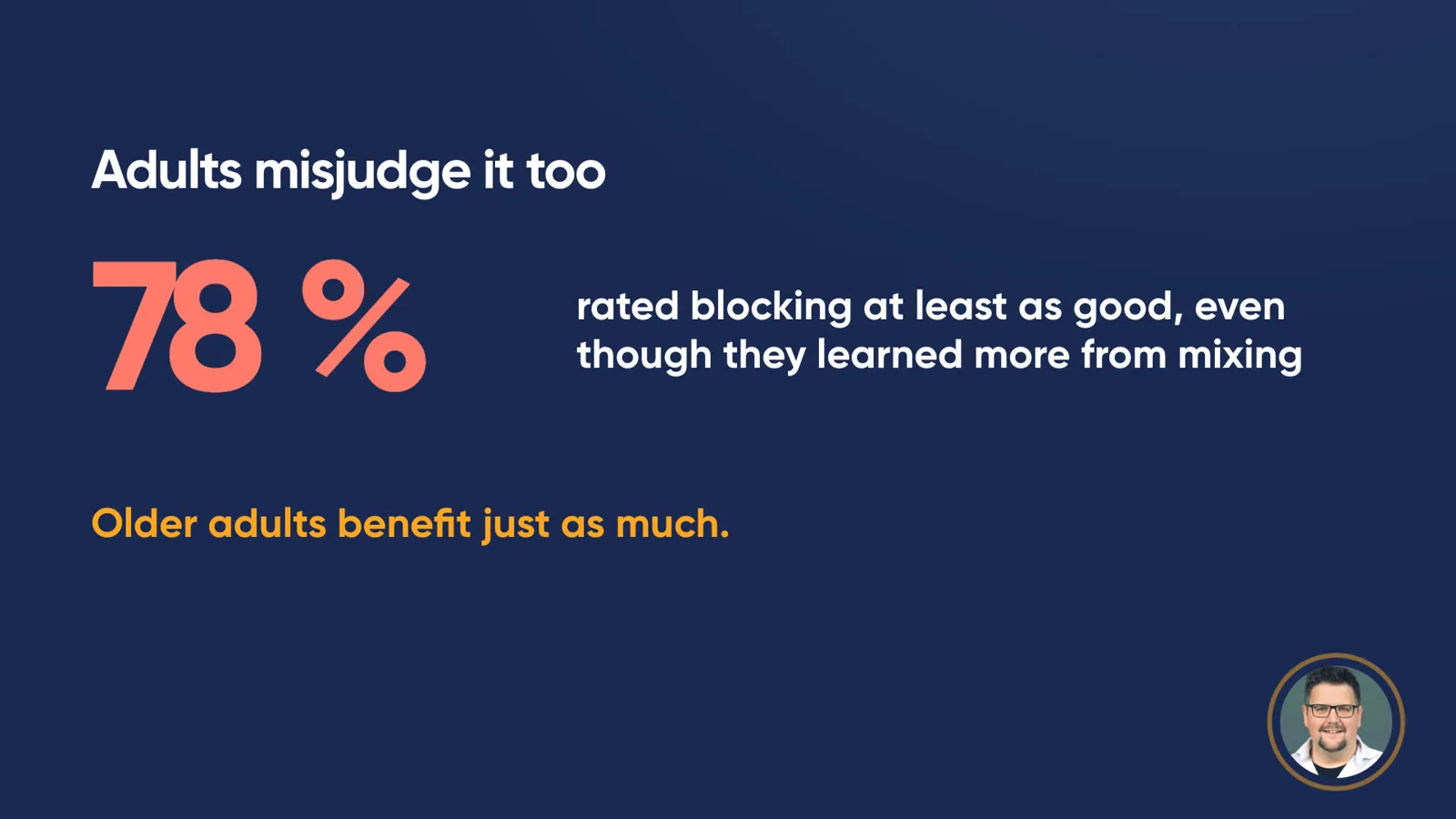
More precisely than the slide: according to the follow-up study, older adults benefit much like younger ones.
A follow-up study by Kornell, Castel, Eich and Bjork in 2010 also showed that older adults benefit from mixing much like younger ones. Good news for continuing education.
Mix your exercises and say why
Mixing works especially well for problem types that look similar and are easily confused. In a bookkeeping course, for example, mix journal entries from different types of transactions instead of going chapter by chapter. That example is my own transfer; the studies come from mathematics and art.
Mixed practice leads to more mistakes at first. Without an explanation, that looks like a bad course. With one, it becomes a useful signal: this is what learning feels like.
An easy place to start is your next worksheet. If the problems are sorted by topic, shuffle the second half. The first half can stay blocked so participants get to know each procedure. Then comes telling them apart.
Hard doesn’t mean bad.