A teacher pastes a student report into ChatGPT to improve the wording. A problem? Yes. A student report contains a child’s personal data, and that does not belong in an AI tool.
Reaching for the AI is still understandable. Writing the report is quick. Finding the right words takes longer. In everyday school life, the decision often happens in seconds. A simple traffic light helps with that.
The traffic light is my own teaching simplification and does not replace the rules of your canton or your school. For a quick assessment, it usually does the job. The examples come from primary and lower secondary school. Course leaders in adult and continuing education can apply the traffic light in the same way, for example to participant lists, feedback or exam results.
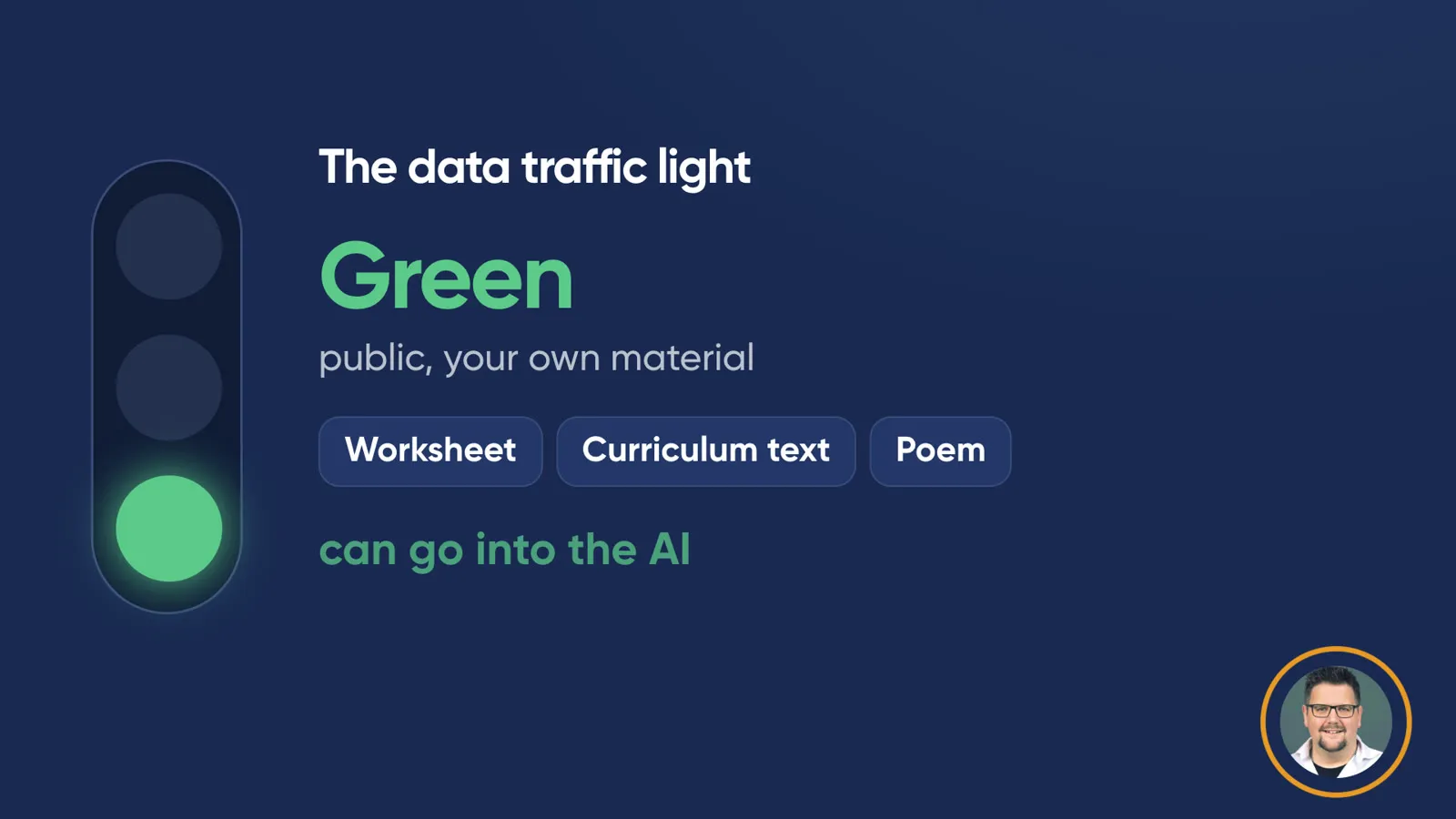
Green: public and your own material
Worksheets you created yourself, curriculum texts, a poem: content like this contains no personal data and can go into the AI. With texts written by others, copyright is a separate question. That is a topic of its own and has nothing to do with the traffic light.
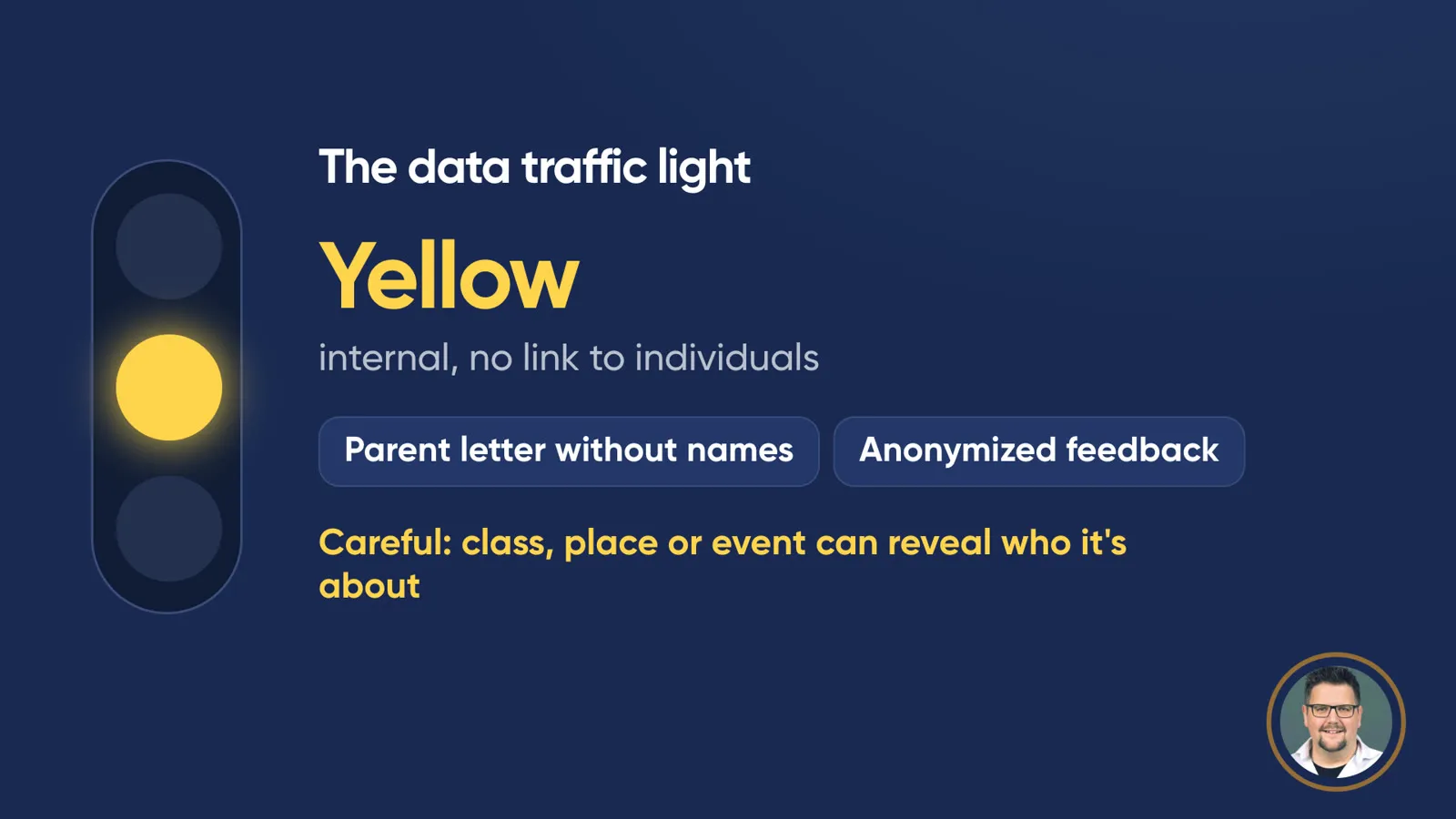
Yellow: internal, but no link to individuals
A letter to parents without names or anonymised feedback is possible, but only if nothing can be traced back to individual children. That is harder than it sounds. Even without names, the class, the place or a particular event can reveal who it is about.
The Zurich school authority explicitly mentions references to names and locations, too. The Data Protection Commissioner of the Canton of Zurich recommends anonymising data, ideally before a provider can see it.
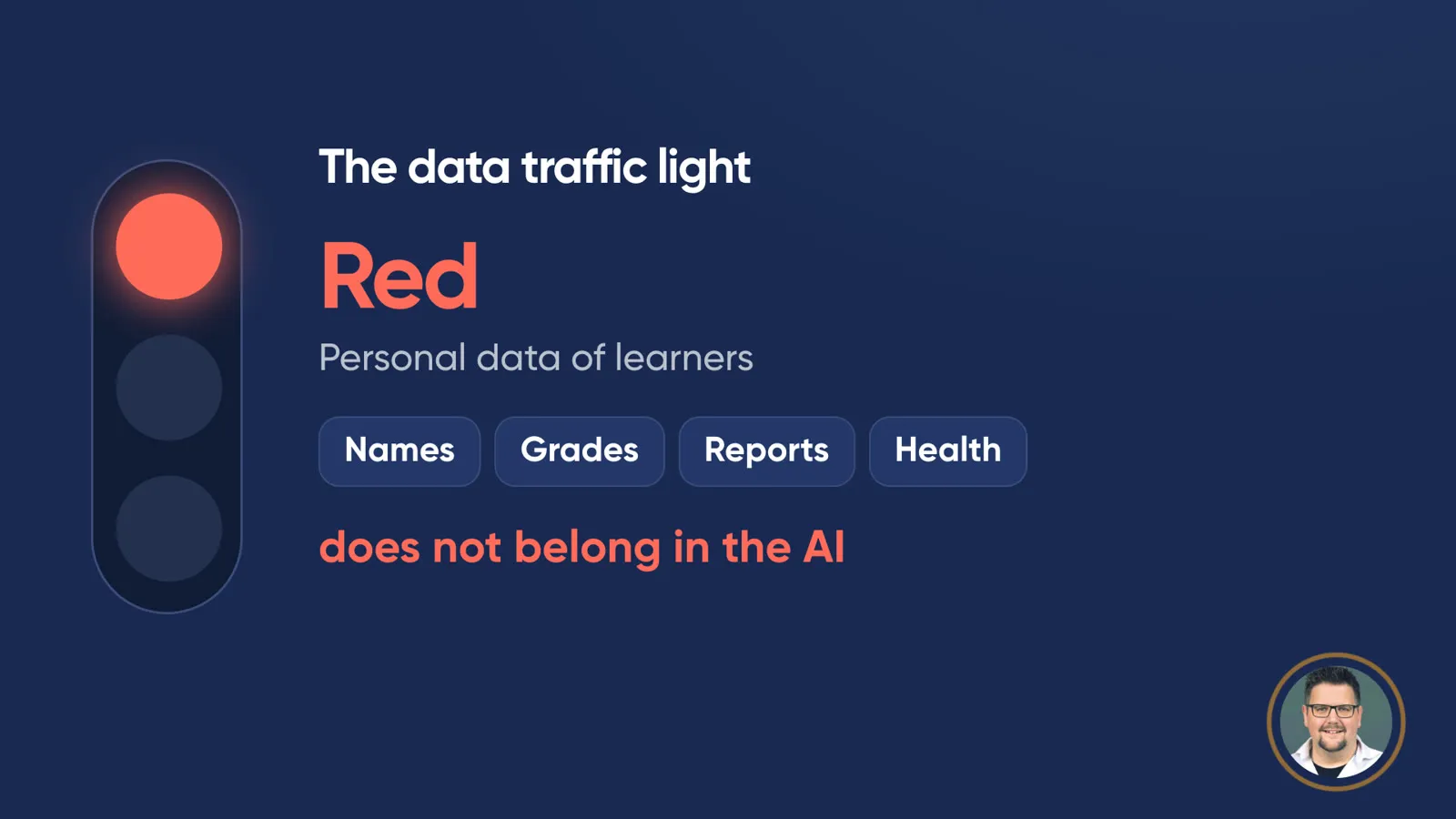
Red: personal data of learners
Names, grades, reports, and above all sensitive data, for example about health, do not belong in the AI. Under Zurich data protection law, health data counts as a special category of personal data.
The Data Protection Commissioner also notes that personal data stays worth protecting even when it is public. And responsibility stays with the school, not with the AI provider.
The cantons differ in detail, the direction is the same
The Zurich school authority is clear: no personal data of students, above all no special categories of personal data. Other cantons handle the details differently. The guidance from the Canton of Solothurn, for example, addresses parental consent for children under 16.
If your school uses its own AI solution with a vetted contract, different rules may apply. When in doubt, ask your school leadership. The school authorities’ rules apply to compulsory schooling. For continuing education they are transferable, but the rules of your own institution are what count there.
Phrasing help yes, student report no
Instead of pasting the report into the AI, you can ask it for general phrasing help with no link to the specific child. For example: “Give me five appreciative ways to describe progress in reading.” You put the fitting sentences into your report yourself. The report stays with you, and the AI still helps.
A small exercise: take three documents you worked on this week and assign each one a colour. Yellow deserves a second look. Would a colleague at your school recognise who it is about? Then it is red.
The video puts the rule of thumb more briefly: “What you wouldn’t post publicly doesn’t belong in the AI.” That means content linked to individuals (red), not internal content with no link to individuals (yellow). Put more precisely:
If someone could tell who it is about, the text doesn’t belong in the AI.
Frequently asked questions
Can teachers put student data into ChatGPT?
No. Personal data of learners such as names, grades and reports does not belong in AI tools; the Zurich school authority is clear: no personal data of students. If your school uses its own AI solution with a vetted contract, different rules may apply.
What data can teachers put into AI tools?
Public material and your own teaching material, such as worksheets, curriculum texts or a poem (green). Internal content with no link to individuals is possible, but only if nothing can be traced back to individual children or participants (yellow).
Is removing the name enough?
Often not. Even without names, the class, the place or a particular event can reveal who it is about. If a colleague at your school would recognise who it is about, it doesn't belong in the AI.